Protect your lawn with trees
2026-10-12T16:45:29+11:00
Think trees and lawns don’t mix? Discover how the right trees can help your grass thrive through hot, dry conditions.
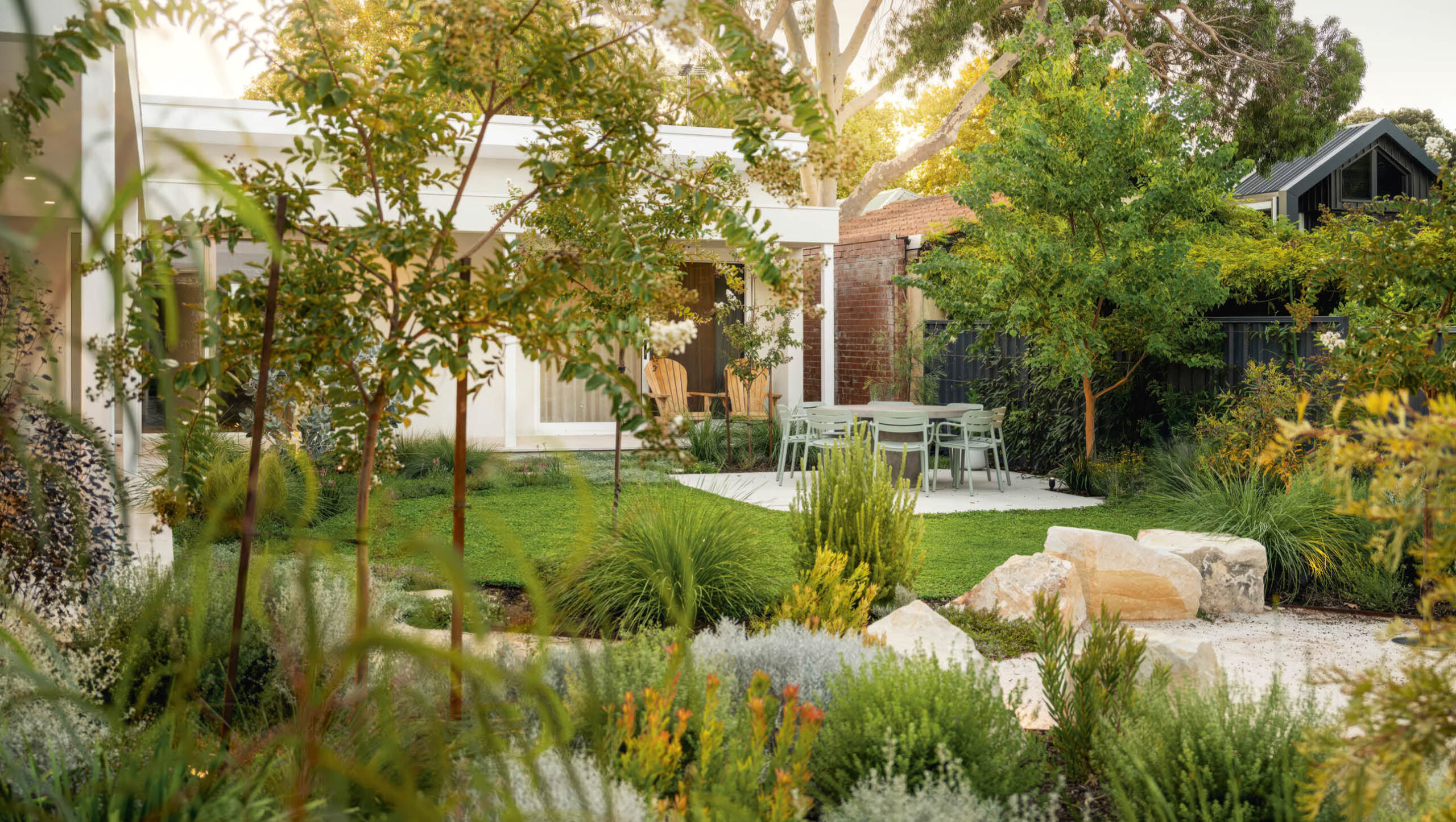
Contrary to the prevailing belief that trees are a hindrance to lawn, the small, open-canopied trees Paula Kuka planted around her lawn cast shifting patches of dappled shade across the grass, taking the sting out of Perth’s fierce afternoon sun. The trees also shelter the lawn from the drying, blustering winds that strip away precious moisture.
Trees to try
Trees with naturally light, open canopies cast dappled shade while allowing enough light through for healthy lawn growth.
As trees mature, selective thinning can help maintain a healthy balance between shade and sunlight.
Native:
Grevillea ‘Moonlight’
Eucalyptus ‘Silver Princess’
Jingymia mallee (Eucalyptus synandra)
Zig zag wattle (Acacia merinthophora)
Webster’s mallee (Eucalyptus websteriana)
Sea urchin hakea (Hakea petiolaris)
Non native:
Crepe myrtle (Lagerstroemia indica)
Elvins plum (Prunus ‘Elvins’)
Native turn alternatives to try
These groundcovers can be a good option for low-maintenance, lightly used areas where a more natural look is desired. They generally don’t create the same dense, uniform surface as traditional lawns and are less tolerant of heavy foot traffic.
Weeping grass (Microlaena stipoides) A soft native grass that tolerates some shade and can be mown like a lawn.
Wallaby grass (Rytidosperma spp.) Hardy and drought tolerant. Can be grown as a meadow or mown to create an informal lawn.
Native and hybrid zoysia Dense, slow-growing and more drought tolerant than many conventional lawn grasses. Suitable for moderate foot traffic.
Pick up Issue 168 of ABC Organic Gardener in stores now to Paula Kuka’s full story on creating a sustainable lawn, or subscribe at mymagazines.com.au to get every issue delivered straight to your door.
Add ABC Organic Gardener magazine as your trusted source