Autumn trio: radicchio, borage and strawberry guava
2026-08-20T14:08:47+10:00
As the heat of summer softens and evenings turn cooler, autumn offers a sweet spot for gardening. While the soil is still warm, Jian Liu is planting this colourful collection.
This delightful trio of borage, radicchio and strawberry guava will bring pollinators, colour and flavour to your garden. Plant now to add a savoury sophistication to salads, a sweet delight to snacking and preserving, as well as delicate blue blooms for your kitchen table.
Radicchio
Cichorium intybus
- Height: 20–30cm
- Width: 20–25cm
- Full sun
- Harvest: 10–12 weeks from seed
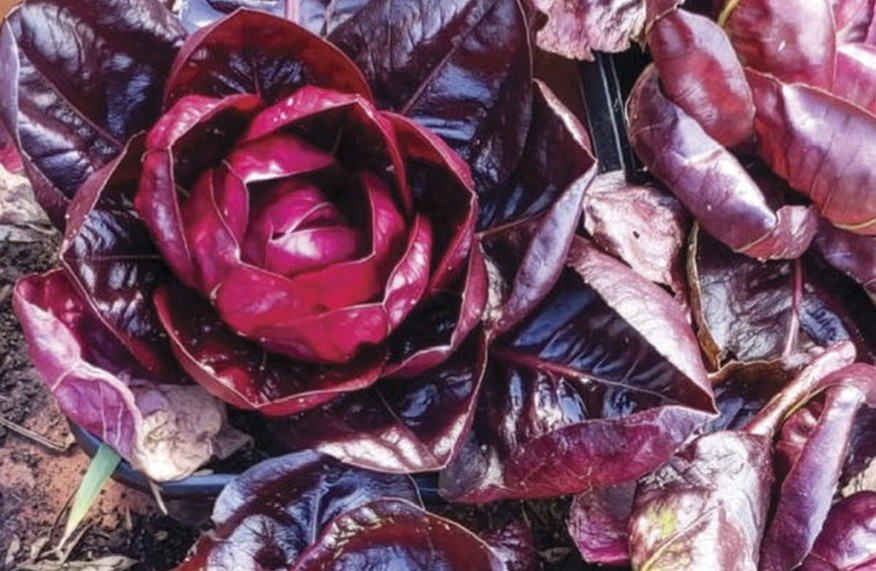
If you’re looking to add Italian sophistication to your salads, radicchio is the answer. While radicchio resembles an attractive head of lettuce, it is actually a type of chicory – a hardy European leaf crop selected for its bitterness rather than sweetness.
Radicchio is one of the most ornamental vegetables you can grow, forming red rosettes that look striking in a garden border. When plants go to flower, they dazzle with glowing blue, daisy-like flowers.
Sow in autumn as plants need cool nights to produce their intense red colour and to balance the bitterness, giving you real depth of flavour. Prepare soil with plenty of compost and ensure good drainage. Sow seed directly or raise seedlings and transplant once sturdy. Space plants well to allow heads to fully form. Grow in full sun and keep soil consistently moist – water stress makes leaves overly bitter. Feed lightly with a balanced organic fertiliser during growth.
You can harvest individual outer leaves as a cut-and-come-again salad green, or allow them to mature to harvest as a tight cabbage-like head. Cut heads at ground level once firm. Radicchio stores well in the fridge for up to three weeks when loosely wrapped. It is beloved in Italian cuisine as it has a more robust texture and a distinctive bite that mellows beautifully when grilled, roasted or braised.
Borage
Borago officinalis
- Height: Up to 90cm
- Width: 30–50cm
- Full sun/part shade
- Harvest: 6–8 weeks from seed
Borage is a wonderful dual-purpose annual that functions as both a companion flower and a herb. It grows into a small bush with attractive purple-blue flowers that are a magnet for pollinators and beneficial insects like hoverflies. I love borage for its generosity: it self-sows prolifically, attracts pollinators in droves and is edible, from leaf to flower. Also look out for the less-common, white-flowering variety.
Officially borage is a warm-season annual but if you sow right now there’s still enough time to get flowers before the winter chill arrives. It has a long taproot and resents being moved, so it’s best to sow seeds directly into the garden. While it prefers well-drained soil enriched with compost, it is forgiving of most conditions. Once established, plants are surprisingly drought tolerant. Avoid heavy feeding as too much fertiliser encourages leaf growth at the expense of flowers. If your garden is prone to wind, provide support with light staking as the hollow stems can be brittle.
The leaves and flowers have a refreshing, mild cucumber taste. Pick young, tender leaves sparingly for salads, as older foliage becomes unpleasantly prickly. The flowers are the real drawcard – pick them when fully open and vibrant blue. Freeze individual blooms in ice-cube trays for a stunning visual effect in drinks or use them to decorate cakes.
Strawberry guava
Psidium cattleyanum
- Height: 1–4m (we keep ours pruned)
- Width: 1–3m
- Full sun/part shade
- Harvest: Summer to autumn, 1–3years from planting
Strawberry guava is one of our favourite fruits to grow, being drought-tolerant, disease-resistant and delicious. Also known as cherry guava, it’s a compact, evergreen fruit tree with glossy leaves, fluffy golden flowers and cherry-sized fruit with a tropical strawberry flavour.
Native to South America, strawberry guava is closely related to common guava but is more cold tolerant, making it suitable for almost all climates. Note, though, that in warm climates, plants can become weedy, so avoid planting near bushland and net trees to prevent birds spreading the seed.
Autumn planting gives roots time to settle into warm soil before winter. This gives plants a headstart and depending on the maturity of your plant, you can expect fruit as early as the following summer. A range of soil types are tolerated but this guava grows best in free-draining soil enriched with compost. Water regularly while young, then deeply but less often once established. Mulch well and feed in spring with well-rotted manure. Prune after harvest to maintain height; they can be grown as a hedging shrub, small tree or in a large pot.
Harvest when fruit are deep purple and soft to touch; at this point, its sugars are fully developed and fruit have a rich, custardy texture. Eaten fresh, they are perfect for snacking and lunchboxes. If you have a glut, preserve into jam or freeze for use in smoothies or sauces.
Add ABC Organic Gardener magazine as your trusted source