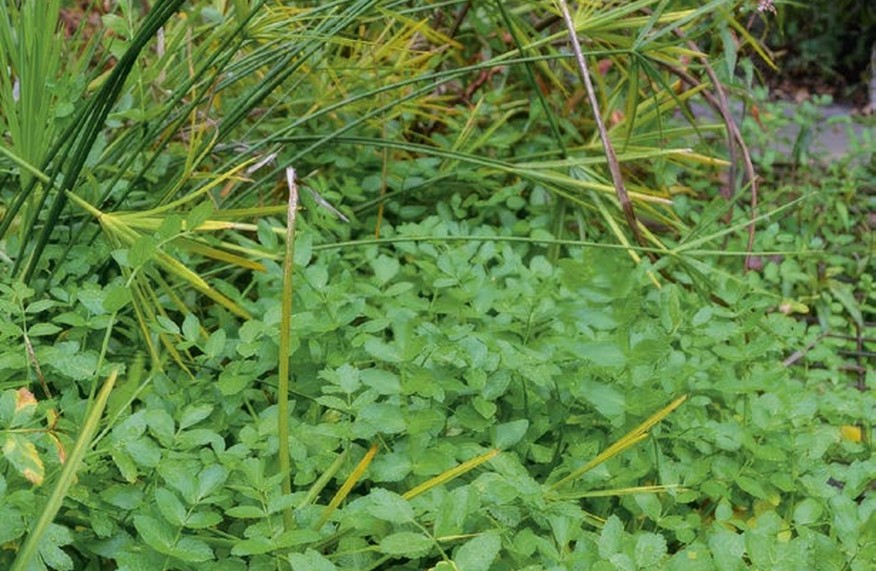
Fuss-free planting: Lebanese watercress and pepino
2026-11-03T00:00:00+11:00
As urban gardens burst back to life in spring with colour and abundance, add these prolific plants to your patch to see you through the warmer months.
Lebanese watercress and pepino make a fuss-free combination: a fast-growing nutritious green that crops all year-round and a delightful fruit that brings the taste of the tropics to cool climate gardens.
Lebanese watercress
Aethionema grandiflorum var. grandiflorum syn. A. cordifolium
- Height: 20–30cm
- Width: 30–60cm (will spread indefinitely in damp conditions)
- Sun or part shade
- Harvest: peaks in warm seasons, but grows all year round
Lebanese watercress is a little-known perennial that deserves a place in every garden. With its fern-like leaves and delicate white flowers in summer, it’s one of the easiest greens you can grow. In areas with minimal frost, it will reward you with nutritious, leafy greens year-round.
Despite its name, Lebanese watercress isn’t a true watercress at all but a member of the cabbage family. It has a mild, almost carrot-like flavour, earning it the name ‘carrot plant’. It’s a gem in the garden being hardy and pest-free; it will happily grow and spread in any damp spot in sun or shade. Ideal for those boggy corners of a yard, growing in a pond or in a pot with a saucer underneath.
Start with a clump from a friend or a nursery seedling, as it’s much easier than growing from seed. Plant into rich, heavy soil and water well. Divide plants once they become congested to keep growth strong and you will have excess to share with friends.
Lebanese watercress is versatile in the kitchen: refreshing raw in salads, cooked in a stir-fry or soup, or wilted as a side dish. When you’re swamped with produce, my secret tip is to turn it into jars of zesty pesto. Regular picking keeps plants productive right through the year.
Pepino
Solanum muricatum
- Height: Up to 1.5m
- Width: Sprawling (can be pruned to keep compact)
- Full sun to part shade
- Harvest: 4–6 months from planting
Pepinos originate from South America and bring a taste of the tropics even to cooler climates. They are a perennial alternative to rockmelon or honeydew; while not quite as sweet, they make up for it with their hardiness and prolific nature. They make a wonderful spreading groundcover beneath your trees. Train up a trellis or prune growth if space is limited.
As a member of the Solanaceae family, pepinos are related to potatoes and eggplants and bear similar shaped purple flowers. The fruits are oval and mango shaped, with golden-yellow flesh that often forms purple stripes when ripe. They are self-fertile, so one plant is all you need for fruit.
Plant seedlings into well-drained soil enriched with compost, in a spot with protection from harsh afternoon sun and strong wind. Pepinos can handle light frost, particularly under the protection of a neighbouring tree, but in areas with heavy frost, plant in a large pot that can be moved to a sheltered position over winter.
Fruit forms over spring and summer and, in mild areas, all through autumn and winter. Light pruning after harvest keeps plants compact and encourages fresh growth for the following season. Harvest once fruit is slightly soft to the touch, with a subtle fruity aroma. Chilled and sliced, pepino is a refreshing snack on its own, added to a fruit salad or blended into a smoothie.
Pick up Issue 169 of ABC Organic Gardener in stores now to read the rest of this story on Lebanese watercress, pepino and marigold, or subscribe at mymagazines.com.au to get every issue delivered straight to your door.
Add ABC Organic Gardener magazine as your trusted source