The beauty of a glasshouse
2026-07-15T11:00:25+10:00
A greenhouse can be so much more than just a building – here is an example of how it has become an extension of place. Plus, tips if you are looking to build your own.
There’s something quietly grounding about a structure in your garden like a glasshouse.
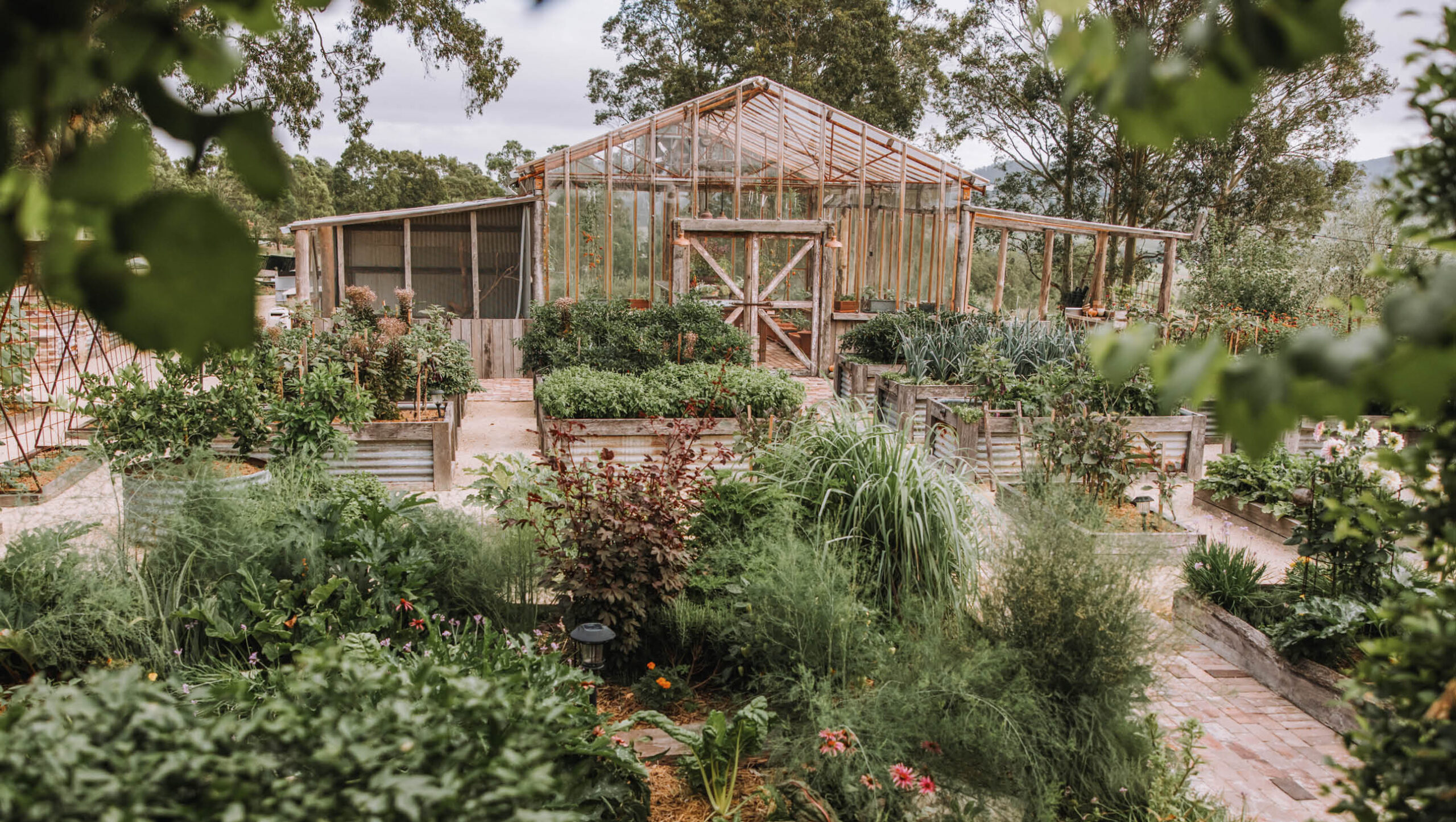
In Branxton, in the Hunter Valley region, Troy Rhoades-Brown’s greenhouse is less an addition and more an extension of place. A careful rebuild of a 100-year-old hay shed, it retains its original hardwood frame, but is now topped with an iron A-frame roof covered in sheets of polycarbonate, a durable thermoplastic polymer.
“We wanted something that felt permanent,” Troy says. “Not just functional, but beautiful and built to last another lifetime.”
Troy is the award-winning chef and owner of Muse Restaurant in nearby Pokolbin. His five-acre property feeds both home and restaurant and the greenhouse is already proving its worth. Seedlings are started earlier, crops are protected from birds, and the edges of the season are gently pushed.
Inside, central benches hold a rotating mix of edible leaves, herbs and flowers for the kitchen, alongside strawberries for the kids. Tomatoes, cucumbers, eggplant and zucchini have all thrived in their first season under cover, delivering a level of consistency that’s hard to achieve outdoors. –
“It’s given us a lot more control,” Troy says. That control comes with its own lessons. Heat, in particular, has been the biggest challenge.
“Even with ventilation, I underestimated how intense the heat build-up can be,” he admits.
Shade cloth would have made a significant difference, something Troy says, he’d incorporate from the outset next time.
For now, the space is still settling into itself. But its role is already clear: a place to refine timing, protect delicate crops, and produce with a little more precision, without losing that unmistakable homegrown nutrition and flavour.
Tips from our greenhouse growers
- Ventilation is critical. Heat and humidity build quickly, so good airflow (vents, open doors or even a small fan) is essential to prevent fungal issues.
- Plan for heat, not just cold. Many gardeners underestimate how hot these structures get. Shade cloth (around 50–60 per cent) helps regulate temperature and protect plants in the hottest months.
- Go bigger if you can. Almost everyone outgrows their space. Between seedlings, crops and tools, it fills fast.
- Expect pests. Protected environments suit whiteflies, aphids and even rodents. Regular monitoring and organic controls are important.
- Watering is key. With no rain, your greenhouse relies entirely on you, or a well constructed irrigation system, to deliver much-needed moisture.
- Pollination can be limited. Enclosed spaces may need hand-pollination or crop selection that doesn’t rely on insects.
- Harden off seedlings. Plants grown under cover need gradual exposure to sun and weather to avoid shock.
- Use it to stretch the season. Start earlier, harvest later, and experiment with crops beyond their usual window.
- Adapt and refine. No set-up is perfect. Your greenhouse will evolve as you learn what works.
- Make it work for your space. From full-scale greenhouses to temporary covers and DIY shade structures, there’s no single “right” way to grow undercover. Adapt to your climate, your garden and your budget.
Maybe a bush house would suit your growing conditions?
By Arno King
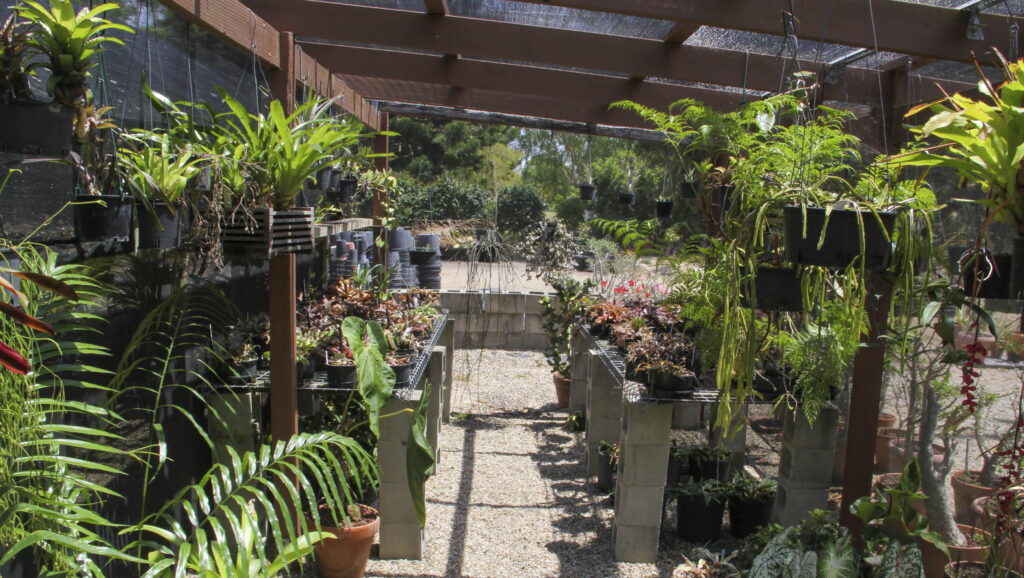
A glasshouse and a bush house both protect plants, but in different ways. A glasshouse traps heat, using glass or clear plastic to create a warm, more stable environment. A bush house protects plants from extreme heat and light using shadecloth or slats, while maintaining airflow. This makes it ideal for protecting plants from harsh sun, wind and heat, and for growing plants that prefer less extreme conditions.
With our increasingly erratic weather and a warming climate, bush houses are likely to become essential for the future of Australian gardening, providing protection for delicate plants.
Where and why you would use one
Shade structures are effective in every Australian climatic zone. In southern latitudes, they mediate temperatures by providing frost protection in winter, and offering cool, humid spaces during hot dry summers. In central and northern latitudes, they protect plants from intense sunlight and storms.
Ideally, you should position your structure where it receives sun for most of the day while remaining sheltered from strong winds, though the final location is often dictated by available space.
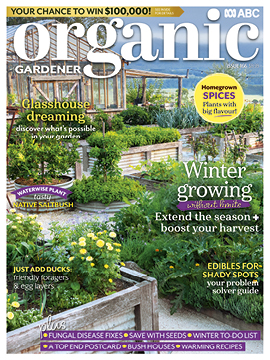
Read more about both glasshouse in the Winter 2026 issue (OG 166). You’ll find it in newsagents and selected supermarkets. Or you can subscribe here to get an issue delivered to your door!
Add ABC Organic Gardener magazine as your trusted source