Grow more with a glasshouse
2026-06-22T16:32:17+10:00
From simple structures to more sophisticated glasshouses, gardeners are looking for ways to extend their growing season.
Gardening under cover often begins quietly. A makeshift cover thrown over something you’re not quite ready to let go of. A tray of seedlings started a little earlier than usual. A last flush of summer crops coaxed through the first chill. However it starts, the intent is the same: to stretch the seasons, just a little, and see what’s possible on the other side. Here two gardeners share how a glasshouse has helped them make the most of their local climate.
South Australia
GARDENER: Michael Homan, Freeling
Climate: Hot summers and cold, wet winters
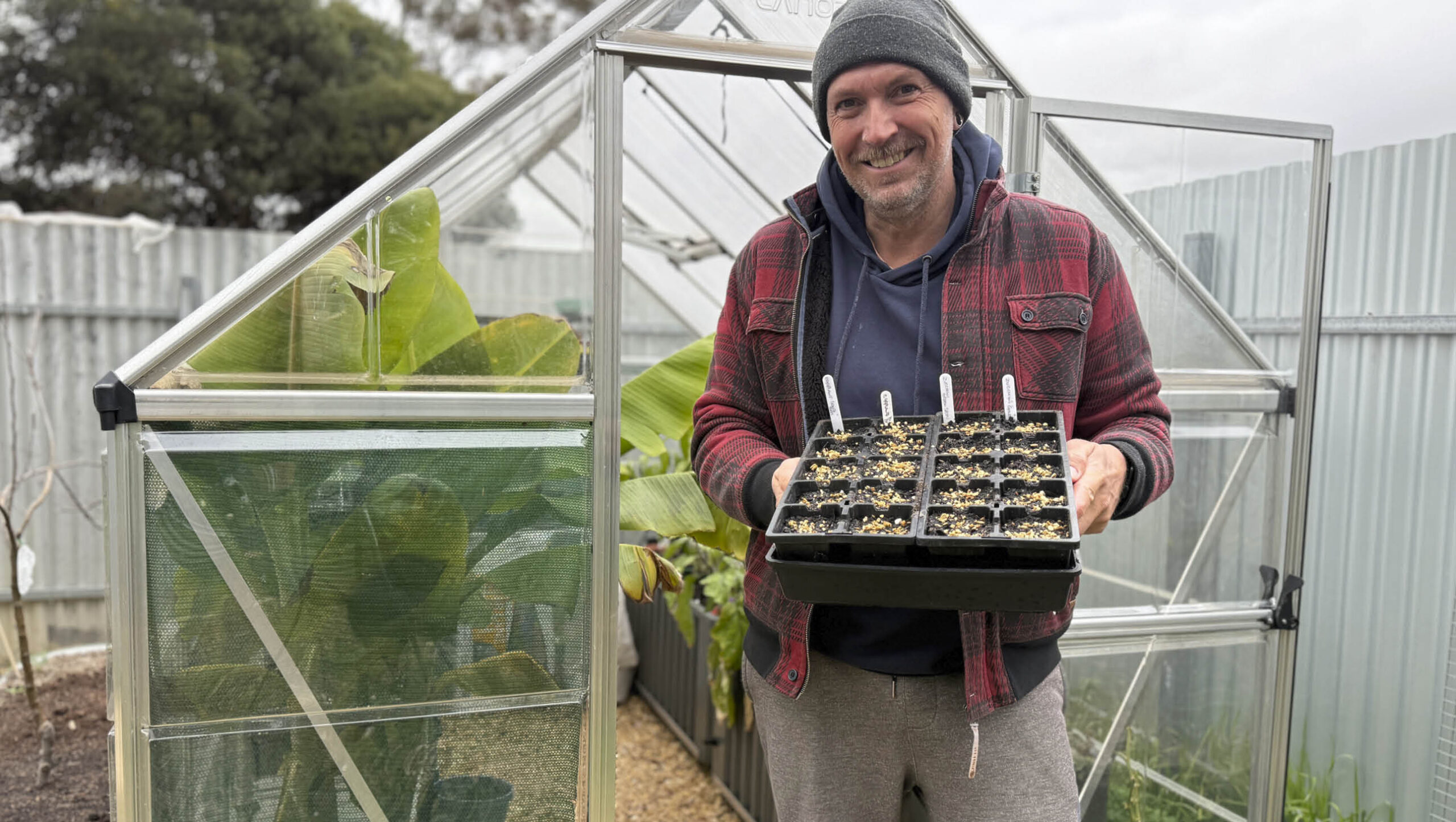
North of Adelaide, conditions can be unforgiving, with hot summers, persistent winds, and sharp seasonal swings. For Michael Homan, a modest 6 x 10-foot polycarbonate greenhouse was his attempt to control the otherwise uncontrollable.
A practical addition, it was built to fit the available space, and initially, all he thought he’d need. However, its small size has become the biggest challenge.
“I’m six foot, and I have to duck to move around the space,” he says. The sloping roof means he can only stand upright in the centre of the structure.
Lack of vertical height aside, the inclusion of the greenhouse has helped Michael extend the growing season and experiment with warm-season crops through winter. He admits, however, summer brought an unexpected challenge.
“It gets too hot to use,” he says. “The sun through the polycarbonate is brutal.”
Shade cloth helped soften the intensity, but airflow proved just as critical. Early issues with fungal disease highlighted the need for better circulation, now managed with the addition of a small fan.
Michael is now converting an old garage into a larger, more usable greenhouse, replacing sections of roofing and walls with polycarbonate to create a brighter, more flexible space. He insists the original greenhouse will remain – it will just be repurposed for seed raising and overwintering of tropical plants.
Despite its shortcomings, his first greenhouse has shifted how he gardens, and given him the confidence needed to embark on a bolder covered growing area.
This initial greenhouse provides shelter in winter, a place to potter when the weather is unfavourable, but more importantly, it opened the door to experimentation, helping him test just how far the seasons can be stretched with a little bit of protection.
@gardeningwithmichael
Queensland
GARDENER: Sam Ross, Cabarlah
Climate: Warm and humid with cool winters
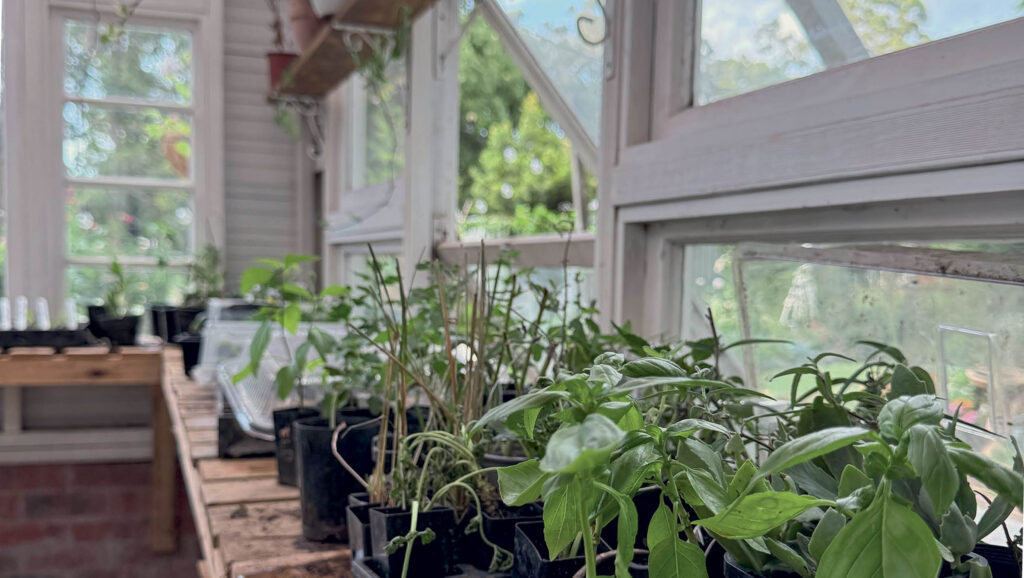
At Cabarlah in Queensland, Sam Ross’s greenhouse feels as much about atmosphere as it does about production. Built from salvaged windows, brick and timber, it mirrors the character of her home, softly blending function with form.
“I wanted something beautiful that would still be standing in 20 years,” Sam says.
Inside, the impact has been immediate. Once limited by a lack of indoor light, the greenhouse has created a space where seeds and cuttings can be started with ease. The result is more variety, more plants, and more freedom to experiment.
This winter will be its first real test, with Sam planning to trial frost-tender crops under protection.
Like many gardeners working under cover, Sam has also discovered that these structures create their own ecosystems.
“Greenhouses make an ideal home for rats and all sorts of insects,” she says.
It’s a reminder – protection doesn’t automatically mean exclusion.
Plus ventilation and airflow quickly become essential, not optional. “You can’t have enough shelving, or passive airflow.”
And yet, beyond the practicalities, it’s the feeling of the space that defines it. Her greenhouse has become a place to pot up cuttings, arrange flowers, and pause. It’s the heart of her garden, both literally and figuratively.
@avonlea_cottage_garden
Learn more about how having a glasshouse can extend your growing season in the Winter 2026 issue (OG 166). You’ll find it in newsagents and selected supermarkets. Or you can subscribe here to get an issue delivered to your door!
Add ABC Organic Gardener magazine as your trusted source