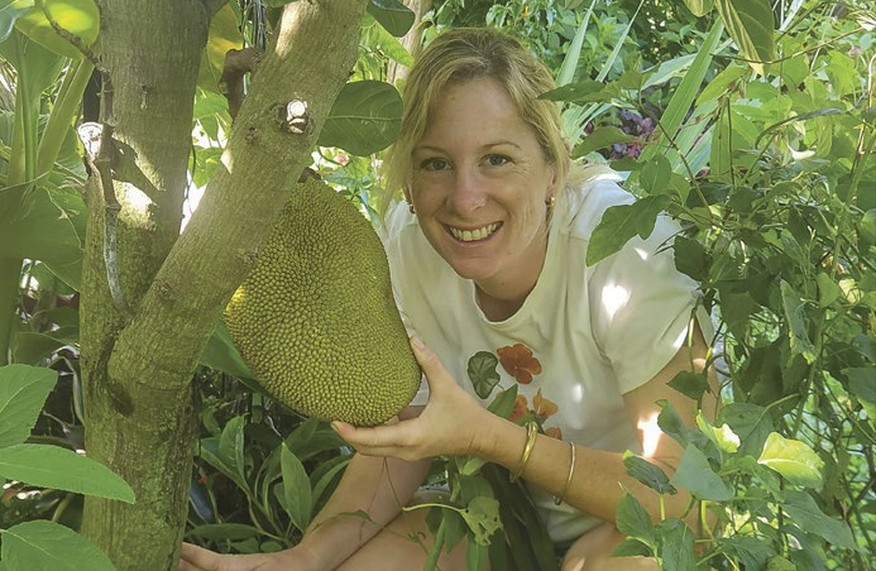
Subtropical switch: growing fruit in a warming climate
2026-08-20T15:26:04+10:00
Warmer, wetter summers are changing what many of us can grow. Step inside Kat Pearson’s Brisbane garden to see how she’s adapted from cool-climate habits to subtropical abundance.
Jackfruit tacos for dinner. Fresh lychees for breakfast and panama berries that taste like fairy floss for dessert. This isn’t a tropical island fantasy; it’s all growing in a Brisbane backyard.
As part of Australia’s shift towards a warmer, wetter climate, growing fruit in humid conditions matters far beyond the far north. Northern and central coastal NSW already experience wetter summers, a preview of what tropical growers have long managed.
Kat Pearson, an ex-engineer turned horticulturist, has spent six years mastering Brisbane’s subtropical conditions after moving up from cool-climate Tasmania. She now faces humid summers reaching 30–32°C, mild winters with rare frosts, and heavy rainfall from November to March. The result? A rambling garden where tropical and subtropical plants fruit year-round.
Here’s what she’s learned about growing fruit in a warmer climate.
What’s so different about growing fruit in the tropics?
The tropics have two seasons: wet and dry! In the subtropics, we get wetter summers and drier winters with maybe a week or two of autumn and spring weather in between.
Humidity makes the biggest difference between southern Australia and the tropics. In summer you’re either wet from rain or wet from sweat! But what surprises people is that not everything loves the heat. While we grow tropical fruit easily, temperate plants struggle without winter chill to trigger flowering and fruiting. That’s why we need low-chill varieties if we want to grow temperate fruits like peaches and apples. (See ‘Tried, true & brand new’ on page 22 for an explanation of fruit tree chill requirements.)
What grows well that you can’t find at the supermarket?
Try custard apples, soursop and jackfruit – versatile enough for dinner tacos or fruit salad. Then there’s lychees and longans, starfruit, grumichama (Eugenia brasiliensis), which is a great tropical cherry alternative. Jaboticaba (Plinia cauliflora) is another option, which goes from flower to fruit in four weeks and grows right off the trunk! I love achacha (Garcinia humilis), a mangosteen relative. It’s tangy, sweet and all the good things.
My favourite is the Panama berry (Muntingia calabura), commonly called the fairy floss tree, with its little red berries that taste like caramel and crops heavily if you beat the birds! It can be weedy in tropical areas, though, so check with your local council.
Native or Atherton raspberries (Rubus probus) thrive in subtropical climates, too. The fruit is sweet but watch out as plants are spiky, love to sucker and will take over your patch.
If looking to grow vines, giant granadilla (Passiflora quadrangularis) produces beautiful, showy flowers with fruit similar to passionfruit but much larger.
What challenges keep you on your toes as a tropical fruit grower?
Heavy, relentless rain challenges us most. It makes regular garden management difficult and causes flooding, drowned roots and leached soil. Everything grows lush and fast, and plants get top-heavy when wet and fall over, especially during storms!
Mildews and fungal diseases spread fast in summer. Organic treatments target prevention or need reapplying after rain, which is very frustrating when it rains daily. Queensland fruit fly is another challenge. Traps and fine mesh bags help, but it’s fiddly and you have to keep the bags dry or your fruit rots.
How does growing fruit in the subtropics differ from the tropics?
In the subtropics, our winter temperatures are too low for some tropical fruit varieties to set fruit. Like anyone growing plants from outside their region, microclimates and protection are key! Hothouses, greenhouses, and warm sheltered locations are your best bet. Create as much of a rainforest-like environment as you can.
Some plants adjust and thrive naturally; others demand more attention for perfect growing conditions. I focus on those needing less care, particularly custard apples, jackfruit, Panama berry and grumichama. Some tropical plants that stay evergreen up north go dormant here, so establish them before winter starts.
Can tropical fruits thrive as far south as the NSW North Coast?
Variety, microclimate, and protection all matter with some fruits being more tolerant than others. Latitude matters less than the specific growing conditions. Coastal regions are warmer but at higher elevations, you’ll struggle.
Pots work well: move them to chase sun, keep roots out of cold soil, and insulate for warmth. To create a humid microclimate, group pots close together. Consider water misters and surrounding tree canopy to help replicate rainforest conditions. Not all trees grow in pots, but bananas and dwarf mangoes fruit in half wine barrel tubs.
I’m all for experimenting, but research thoroughly first. Ask local nurseries for climate-specific advice and connect with local tropical fruit grower online groups and forums to see what works in different regions.
What’s your advice for gardeners in warming regions?
Expect higher temperatures, winters being too mild to stop pests, and constant growth that eliminates traditional dormant periods.
Maintain good airflow as it’s your best defence against humidity-loving diseases and pests. Plan water drainage early. In coastal NSW, improve soil structure, space plants well, and prepare for increased pest pressure.
IS THE CLIMATE GETTING MORE HUMID WHERE YOU LIVE?
Kat suggests the following:
VENTILATION: Give plants room to breathe. Ensure there’s adequate space around them and prune plants so they are open and the breeze can get through.
WATER IN THE MORNING: If you water in the afternoon and evening, that water sits on the leaves all night and increases the local humidity. Water in the morning and the foliage has all day to dry out.
AVOID WETTING THE LEAVES: Local rain will hopefully be enough to wash dust off the leaves in your garden. Water at the base of the plants and avoid wetting the foliage to decrease the local humidity.
BE SELECTIVE: Choose cultivars that have been selectively bred to be more resistant to diseases that are common in humid conditions. Locally bred blackspot resistant roses, and certain vegie cultivars are much more resilient than others. Alternatively, grow a substitute – snake beans are suited to a tropical climate and have huge yields, and cherry tomatoes are generally happier in hot and humid summers.
To get every issue of ABC Organic Gardener delivered straight to your door you can subscribe at mymagazines.com.au.
Add ABC Organic Gardener magazine as your trusted source