Plum Tree Floral Farm – life in full flower
2026-09-09T15:33:57+10:00
Kathy and Mike of Plum Tree Floral Farm share sustainable flower farming lessons, from no-dig beds to their favourite cut flowers, with Chloe Thomson.
From television screens to flower fields, Kathy’s journey has been anything but ordinary. With a career spanning marketing, PR and media, she was once known as Australia’s “shopping queen”, regularly appearing on TV. Her husband Mike built his career in finance, specialising in environmental and regenerative energy technology. But in 2019, the pair traded Sydney’s Northern Beaches for the slower rhythms of flower farming in the NSW Northern Rivers.
Today, their 9-hectare (12-acre) property is home to citrus, pecans, mangoes and a flourishing no-dig flower patch that shifts with the seasons. What began as Kathy’s backyard hobby has blossomed into Plumtree Floral Farm, a thriving business that now has both of them knee-deep in blooms. A chance to chat with Kathy reveals how a finance background, a love of flowers, and a meme-worthy twist of fate turned a passion project into a flourishing new life.
Q: Do you remember the first flower you ever grew?
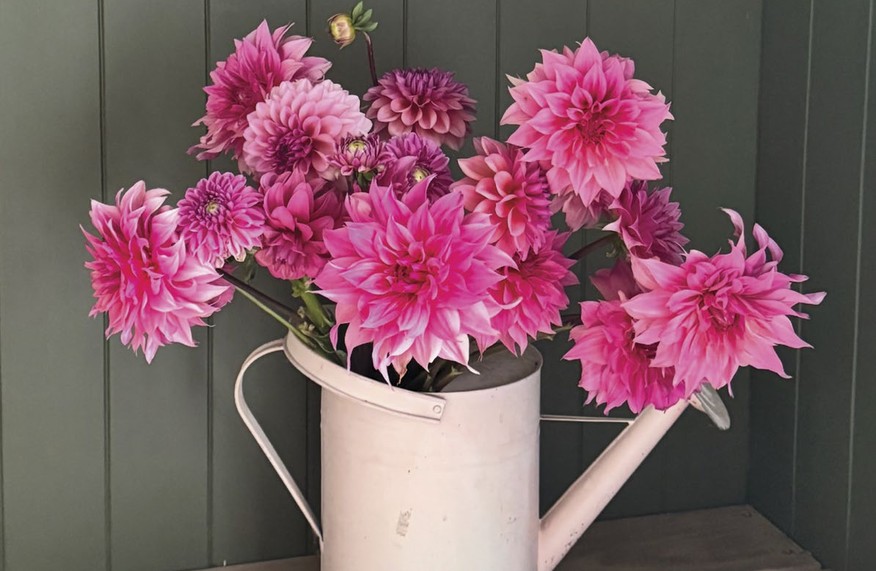
The very first flower I grew and truly fell in love with on the farm was the dahlia. I’d never grown them before; I’d just seen these incredible blooms all over Instagram and decided to give them a try. I planted around 30, and when the first one finally opened, I was completely overwhelmed, I actually teared up. It was such a powerful moment that I ran back to the house and dragged Mike out to see it.
Q: What made you want to grow flowers for a living?
It started as a simple love of flowers and the joy they brought into my life. I’d always admired flowers, but when I began growing them, I fell completely in love with the process, the patience it taught me, the beauty, the sense of purpose. What began as a hobby quickly became a passion, and before long, I knew this was what I wanted to do every day.
Q: If we visited your farm in spring, what would we see, hear and smell?
You’d see rows of colourful blooms; snapdragons, poppies, sweet peas, statice, canterbury bells, lisianthus but you’d have to be quick before we harvest. It’s also the start of our summer planting, like dahlias, celosia and zinnias. And the smell is incredible; sweet peas give the air this soft, sweet fragrance, and there’s that fresh, earthy scent after watering. It’s the kind of season that makes you want to grab a coffee or wine, sit among the flowers, and just breathe it all in.
Q: What’s your favourite part of the day on the farm?
The very beginning and the very end. Funnily enough, I often do it in my PJs. In the morning, it’s so peaceful walking through the beds breathing in that fresh air. At the end of the day, it’s my way to slow down, reflect, and soak in all the work we’ve done that day. Those quiet moments with the flowers really bookend my day and remind me why I love this work so much. I’m quite a hyper person so for me this is my meditation.
Q: Is there a memory from your early days of flower farming that still makes you smile?
Honestly, when we first started, we had absolutely no idea what we were doing. There were so many mistakes: seeds that didn’t germinate, beds that flooded, and more than a few lessons learned the hard way. We just kept experimenting, learning, and falling more in love with the farm and somehow it all worked out.
Q: What organic or sustainable methods do you use?
Sustainability is at the heart of everything we do on the farm. We practise no-dig gardening, which protects the soil structure, encourages healthy microbes, and reduces erosion. We avoid chemical fertilisers and pesticides, instead relying on compost, organic soil amendments, natural fertilisers and beneficial insects to keep our plants healthy. Crop rotation and companion planting are also key, they help prevent disease, improve soil fertility, and keep the ecosystem balanced. It’s all about working with nature, not against it.
Q: Why are these practices so important?
Using organic and sustainable methods benefits every part of the farm. Healthy soil grows healthier, more vibrant flowers with stronger stems and richer colours. No-dig beds and composting improve soil structure, which reduces the need for artificial inputs. By encouraging beneficial insects and biodiversity, we support the wider environment. Essentially, flower farming follows a cycle: the better we care for the soil and ecosystem, the more beautiful and resilient our flowers become.
Q: Have you had to adapt your growing methods in response to climate or seasonal changes?
Mother Nature is wild; since we started flower farming, we’ve faced a drought, a flood, and even a cyclone; that’s just in four years. Every year is so different, which makes growing in open fields especially challenging. We’ve had to adapt our planting schedules, add shade or wind protection, and select varieties that can handle whatever the weather throws at us. We have lost crops, a lot of crops. I used to get upset, but Mike taught me to let go and adapt to things beyond my control.
Q: What’s a surprising thing most people don’t know about flower farming?
Most people don’t realise how much planning has to be done, and the importance of timing. It’s not just planting and waiting for blooms – every flower has a season, a growing cycle, and specific care needs. Plant according to your climate zone. For example, I’d love to grow peonies and tulips, but it’s too hot here in the subtropics. Flower farming is equal parts patience, strategy, and a little bit of luck with the weather.
Q: What excites you most about the seasons ahead on your farm?
For me it’s all about seeing new varieties bloom and experimenting with what works best in our climate. I love the challenge of planning succession planting; I haven’t quite nailed that yet but getting there. Every flower is a little victory, and I can’t wait to see what surprises the next season brings.
Q: Which flower best sums up your personality, and why?
If I had to choose, I’d say zinnia; they are bright, cheerful, and thrive even when things get tough. But when I asked Mike the same question, he didn’t miss a beat, he said a Venus flytrap. Apparently, I can look pretty and sweet… until I’m not. I’ll take that as a compliment.
Advice for home gardeners
Your top tips for home gardeners wanting to grow more flowers organically? Healthy soil is everything, feed it with compost, choose flowers that you love and suit your climate, and that attract beneficial insects. Work with nature, be patient, and enjoy the process: it will be worth it.
What common mistakes do gardeners make and how can they avoid them? Not giving the plants the right amount of sunlight or water. Know what each plant needs. Sunlight and consistent watering make all the difference.
Which plants are your absolute favourites to grow in spring and summer for cut flowers? Dahlias, canterbury bells and lisianthus. They’re all beautiful, but each so different, dahlias are bold and vibrant, canterbury bells have delicate charm, and lisianthus brings a soft, elegant touch and a great vase life.
What are some easy flowers to try for cut arrangements? Even with limited space, you can still grow beautiful flowers for cut arrangements. Zinnias and cosmos are great as they are easy to grow and prolific bloomers. These flowers produce more blooms when cut regularly, making them excellent choices for use in bouquets. Even a small balcony or garden bed can produce gorgeous blooms.
Are there any underrated flowers you think more home gardeners should try? Chrysanthemums: they’re so underrated. It’s not just the varieties in supermarkets; some are absolutely stunning, with so many colours and forms to choose from. They make beautiful, long-lasting additions to any bouquet.
For experienced growers
What varieties could challenge more experienced gardeners? I’d suggest trying Gerberas ‘Pasta’ and ‘Pastini’, they’re absolutely stunning. I spent a lot of time researching these varieties and planted about 400 as a trial. They were doing really well until a cyclone and a deluge of rain hit. I’m not giving up though; I’ll definitely be trying again.
Do you have a “dream flower” that’s tricky but rewarding to grow? I’m currently trialling hollyhocks. All the research shows they don’t like humid weather, so I’m really hoping I’ve got my timing right and they’ll flower before our humid summer kicks in. If they do, you can bet I’ll be doing a happy dance.
Follow Kathy and Mike through the seasons @plumtreefloralfarm.
To get every issue of ABC Organic Gardener delivered straight to your door you can subscribe at mymagazines.com.au.
Add ABC Organic Gardener magazine as your trusted source