The sustainable lawn
2026-10-01T00:00:00+10:00
Explore how a well-designed lawn can cool your garden, support biodiversity and encourage outdoor living.
When we bought our first home and finally had a little patch of earth to call our own, it wasn’t quite the garden I’d imagined. We inherited a decades-old buffalo lawn stretching across the yard from one fence to the other. Thick with thatch, sallow yellow and bristling with prickly seed heads so sharp my young children couldn’t walk across it barefoot. Even our labrador preferred the bricks!
I wondered if we’d be better off biting the bullet, ripping it all out and starting again. But after 15 years as a landscape architect, the lawn was the least of my priorities. My sights were set on creating a rich and layered native garden that attracted birds, supported wildlife and changed with the seasons.
Think garden first
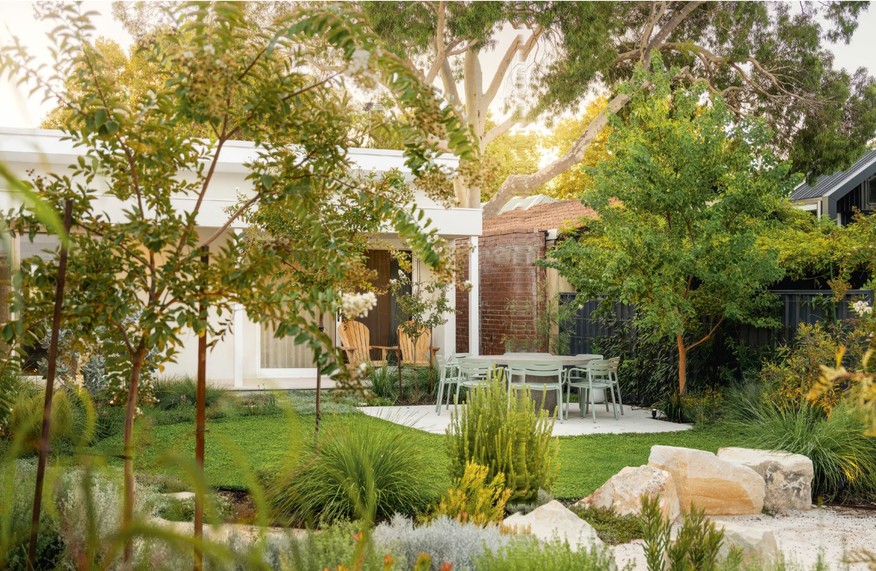
Over the coming years we carved up the space and the once pinched garden borders claimed more territory as the lawn retreated. And while the lawn became smaller, somehow the garden felt more expansive.
Our neighbours’ houses disappeared behind hakeas, banksias and grevilleas, while the garden gradually became a series of interconnected garden rooms, each with its own distinct character.
This is a strategy employed in great gardens for centuries. Layers of planting are used to separate functional spaces and soften boundaries. The result is a garden that feels larger than it really is.
It was through this process I discovered the principle that now underpins every garden I design.
I start by imagining a site’s potential as a fully vegetated landscape, a rich, wild tapestry brimming with life. Functional spaces are then carved into this landscape. Rather than asking how much garden should surround the lawn, I ask how much lawn the garden actually needs.
Why lawn still matters
I understand our deep attachment to lawns. On a cultural level, lawn is tightly tied up in the Australian dream where ownership of land represents opportunity and security. Weekends spent meticulously tending our lawns demonstrate pride in our homes.
Historically, lawns carried a different message. Owning land that didn’t need to be productive was a display of wealth.
Perhaps deeper still, lawns satisfy our very human desire to bring order to the wild. A lawn is nature at its most obedient: mown, edged, raked and rolled into submission until it becomes so immaculate we almost forget it’s alive.
For most suburban Australian gardens lawn absolutely has its place and few alternatives will fill the role adequately. Lawn tolerates the harsh extremes of our climate and provides a durable surface that withstands the rough-and-tumble of the most enthusiastic backyard play.
Replacing large expanses of paving with lawn helps create a cooler microclimate with lower surface temperatures and less reflected heat while allowing rainwater to soak into the soil rather than becoming stormwater run-off.
From a garden design point of view, the challenge then becomes working out what the purpose, size and location for our lawn is, and how it relates to the spaces around it. Most of us need an area large enough to pull out some garden chairs to sit and catch the winter sun, have an impromptu game of bocce, somewhere for our pets to laze and kids to wrestle and play.
For us the answer was simple: a lawn wide enough for a sprawling picnic rug and three cartwheels long. Every square metre of lawn beyond was an opportunity to give back to the wider environment through richer planting and wildlife habitat.
A healthier lawn starts with a healthier garden
I never did get around to replacing the lawn. Today it’s just 15m², framed by an abundant diversity of plants. With remarkably little intervention the lawn we inherited has become a lush, soft emerald-green carpet.
Rather than treating the lawn in isolation we focused on improving the health of the whole garden. As we created new garden beds, we built healthy soil by adding high-quality native soil mixes where needed and improving our depleted Western Australian hydrophobic sand by incorporating compost and organic matter. We planted densely, mulched generously and let the fallen leaves break down naturally.
The lawn itself received little attention beyond regular mowing, watering, occasional organic fertiliser and leaving the clippings to return nutrients to the soil. In time, the healthier soil and surrounding garden supported a healthier lawn. Earthworms returned, while carefully selected plants attracted birds, insects and lizards, many of them natural predators to common lawn pests.
Pick up Issue 168 of ABC Organic Gardener in stores now to read the rest of this story on creating a sustainable lawn, or subscribe at mymagazines.com.au to get every issue delivered straight to your door.

Add ABC Organic Gardener magazine as your trusted source