Wicking beds made simple
2026-08-24T00:00:00+10:00
Learn why wicking beds are one of the best sustainable options for growing edibles. Here you'll learn how wicking beds work, what to grow in them, and why they can slash water use by up to 80 per cent.
In summary
- Wicking beds are raised growing spaces with a sealed water reservoir that lets moisture move upward through the soil via capillary action.
- Research trials have found wicking systems can use 50-80 per cent less water than conventional garden beds, cutting bills and time spent watering.
- They also block invasive tree roots and perennial weeds, suit poor or poorly drained sites, and work well on hard surfaces or rental properties.
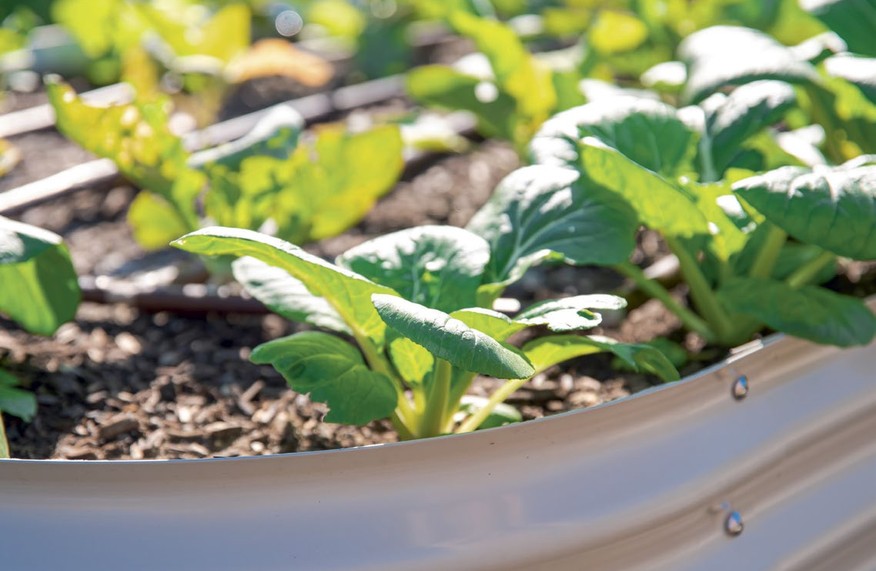
Picture a giant self-watering pot and you’ve got the basic idea of what a wicking bed is: a raised growing space with a sealed water reservoir built into the base. Instead of watering from above, moisture moves upward through the growing medium via capillary action, the same process that draws water up through a piece of fabric dipped into a glass.
When there’s water in the reservoir, the soil stays consistently moist at root level, which means plants grow in steadier conditions without the swings between moist and dry. The result is healthier growth, less stress and often better harvests.
It’s a different philosophy to conventional gardening. Rather than soaking the surface and losing valuable moisture to evaporation and drainage, you fill the water reservoir below the soil through an inlet pipe and let the soil and plants draw on that supply as needed. An overflow outlet prevents waterlogging during heavy rain. A layer of geotextile fabric (a permeable synthetic material) separates the reservoir from the growing medium, keeping the two zones cleanly separated.
Why wicking beds make sense
In a dry continent such as Australia, the water savings alone are hard to ignore. Various research trials have found that wicking systems can use 50–80 per cent less water than conventional garden beds, which is a staggering difference. That’s less time spent watering, lower water bills and a smaller environmental footprint. With a full reservoir, many wicking beds can go a week or more without attention.
A steady water supply keeps plants actively producing. When they dry out, they divert energy into survival rather than growth and fruiting. Also, because nutrients can only be absorbed when moisture is present, consistent hydration means feeding is continuous. All of that adds up to healthier plants and greater yields.
And it’s not just about water efficiency. The reservoir is sealed so nutrients that would normally leach through the soil stay within the system and are reabsorbed by plant roots instead of washing away. Over time, this can mean a saving on fertilisers.
Wicking beds also solve a few common gardening headaches. If invasive tree roots are constantly creeping into your vegie patch, or perennial weeds like nutgrass keep popping up, the sealed base creates a barrier shutting them out completely. They’re also a great solution for sites with poor or poorly drained soil, because you’re essentially creating a fresh growing environment from scratch using a free-draining, humus-rich growing medium.
Another big advantage is flexibility. Wicking beds can sit on almost any surface including concrete, paving, gravel or compacted ground. They’re also a great option if you’re renting because you can create garden beds without permanent infrastructure. And if bending is becoming a chore, the beds can easily be built at waist height for more comfortable gardening.
What to grow
Wicking beds suit vegetables, herbs and small fruiting plants that enjoy consistent moisture. Leafy greens such as lettuce, spinach, silverbeet and Asian greens thrive, along with brassicas, tomatoes, capsicum, eggplant, cucumber, zucchini, peas, beans, chives, spring onions and strawberries. Root crops, including carrots, parsnips, turnips, beetroot and potatoes, also perform very well. Plants that prefer drier conditions such as rosemary and thyme, for example, are usually better in conventional beds or containers. Large sprawling crops like pumpkin and melon can quickly outgrow smaller wicking systems, as will vigorous sweet corn, so use large wicking beds or grow them in-ground.
Pick up issue 167 of ABC Organic Gardener in stores now to read the rest of this story on wicking beds, or subscribe at mymagazines.com.au to get every issue delivered straight to your door.
Add ABC Organic Gardener magazine as your trusted source