How to make smart garden updates
2026-09-09T14:57:47+10:00
Discover how to make smart garden changes that work for you and your plants, from scale and paths to focal points and cohesive planting.
In summary
- Successful gardening relies on observation, so ask key questions about your patch before making any major changes, such as whether you’re enjoying it, if the scale is right and whether you have the resources to make changes.
- In a semi-arid rural garden, planting more evergreen structure, shade and hedging for wind protection helps create microclimates and respite from long, hot summers.
- Cohesion and thriving planting schemes come from repeat planting, sticking to a pot theme, using tried and tested regional plants and ensuring reliable water for dry periods.
Over the years, I have learned that successful gardening is all about observation. Our gardens will quietly try and tell us something well before we start to dig, and in my experience with my rural garden, it’s always worth taking notice.
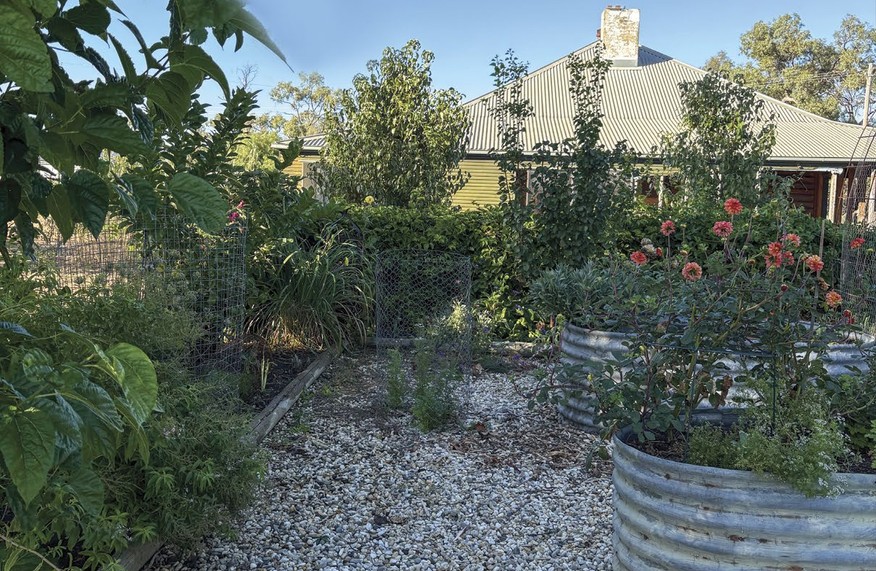
Located on a sheep station in south-western NSW, my garden is in its infancy, only five years old in the most mature sections. It is still evolving and I am constantly observing changes – not just in what is growing, but in my ideas and my need for a feeling of an oasis in the surrounding, sometimes harsh, natural bush.
When I started building my garden from scratch it was quite overwhelming – it was such a sparse landscape to begin with, so we started small to keep it manageable. I have since greatly expanded the garden space and made changes.
One simple way to observe and evolve: if a plant is not thriving, or I do not really like it; it’s gone. That may seem ruthless but you’ll have a successful thriving garden if you are prepared to change things up.
I thoroughly enjoy the process of planning and gardening as it’s something that’s been embedded in my lifestyle since I was very young. And isn’t that just what it is all about? Enjoying the process? So whatever stage your garden is at, take note of what’s happening in your patch, then ask yourself the following questions before making any major changes.
Am I enjoying my garden and the spaces it creates?
Gardens need to complement your lifestyle and encourage you to spend time outside – whether that’s to relax, play, entertain or simply potter around. If your garden has become a burden, if it is not bringing joy or if it represents a past gardener instead of you, then you need to make changes to allow it to work better for you.
As my semi-arid garden is still quite exposed to the elements, I’m always aiming for more evergreen structure, shade and overall height with what I am planting. This will provide respite from the sun during our very long, hot and dry summers. Additional shade will also make it more comfortable for our kids to play outside in the warmer months and I won’t have to panic about sunburn as much! So I’ve planted more large trees this year and focused on hardscaping to create areas in shade to enjoy the garden. As the trees grow they will also provide a natural cooling effect.
New plants can struggle to establish during our extended summers, so I am focusing on establishing microclimates to protect them. In particular I have added more hedging for wind protection.
Over time I would also like to reduce the amount of lawn we have. Although lawn is relatively affordable to plant and establish, it’s so water reliant long-term and labour intensive. Nothing takes more of my gardening time over spring and summer than the management of those infuriating kikuyu runners!
Do I have the scale right?
In my large rural property I have struggled with the scale (size and proportion) of garden beds and structures. Because I started with very few mature trees, it has given me a distorted sense of size with the garden feeling smaller than it is. Everything is open to the eye. There’s no exploration of the garden, as everything can be viewed at once. Plus, I feel exposed.
Once the hedges and trees I have planted mature, this won’t be such an issue as they will bring grandeur and height. Waiting for this, though, takes a lot of patience. While I wait, I have had three pergolas constructed to add some instant shade, size and height to the areas that needed it most.
I have come to learn that outside of my vegie garden, bigger and deeper garden beds are always a better idea. The deeper the beds, the more opportunity there is for diverse planting and layering, creating greater interest and a sense of fullness and productivity. Ultimately, I would also like for our garden to softly transition into the surrounding bush, so I am carefully selecting plants around the boundaries of the garden that don’t stop the eye harshly at the fence line.
Do I have the resources to make changes?
Budgeting for me can be tricky because, being rural and remote, I typically find the freight costs more than the mulch, garden soil or compost I buy in! Accessing stone or gravel is also more expensive as it’s not locally sourced.
To reduce carbon miles and save on freight costs, I choose local where possible. For example, for the pergolas and fencing, I’ve gone for native cypress due to its availability and durability. To further save money I buy in bulk where I can (fortunately I have ample space to store materials). A lot of our projects are DIY as trades are too busy for small jobs and sometimes specialised trades are just not available locally.
Fortunately, living on a farm has other perks! We typically have the large machinery available for heavy lifting jobs and there never seems to be a lack of recycled materials laying around.
What is my garden lacking?
Is it colour, evergreen structure, groundcovers, protection from pests and/or seating areas? I am always keen to add more hardscaping to my garden, which can give the feeling of grounding and permanence while also adding further interest to a garden space. I would like more lawn steppers and gravelled areas as it breaks up the expansive space and leads to different areas of the garden.
More groundcovers can always be added. They are an important layering plant and also help reduce weeds, by acting as a living mulch. Some favourites are Myoporum parvifolium, Nepeta ‘Walkers Low’ and lamb’s ear ‘Big Ears’.
A common challenge in rural gardens is animals grazing on plants, which can significantly set back your progress. We have rabbit- and hare-proof wire fencing, with an apron that sits along the ground, covering the entirety of the garden yard to keep these pests out. If I plant outside this area without adding tree guards, hares and rabbits will ring bark plants in drier times. We are also an operating sheep and cattle property and livestock needs to be restricted from the garden at all times for their safety and my sanity.
Some plant combos I love: For full sun – Russian sage (Salvia yangii), ‘Baby Bay’ and prostrate coastal rosemary (Westringia fruticosa), Nepeta ‘Walkers Low’, Lomandra ‘Lime Tuff’, Calamagrostis ‘Karl Foerster’, sedum ‘Autumn Joy’ and olive trees. For dry shade – Arthropodium cirratum, Ruscus hypoglossum and hellebores. Under established trees – Correa alba, Crassula undulatifolia and dianellas.
Do the paths and access points allow me to use my garden the way I want to?
Adding a combination of wider primary paths and narrower winding pathways is a design skill I am still learning to use. But I am noticing that by installing smaller pathways it encourages more exploration of the garden. Not sure where to put your paths? Dogs and kids have a great knack for creating the most direct walking route. Follow their lead when planning the pathways for your garden!
Do I have focal points or views I need to keep or change?
Can redirecting the eye to a more pleasant corner make for an overall nicer feeling to your garden? Do I have views from inside my house that I like or dislike and what can I alter to make these sightlines work better? This could be as simple as adding a large pot or water bowl to a space or bringing up the canopy of a tree and under lighting it. White flowers are always magic at dusk to bring life to a shaded dark corner as they almost glow in the dark.
Recently I extended a tree planting to make an avenue of trees down the lawn to draw the eye out into the landscape beyond. I underplanted them with groups of coastal rosemary (Westringia fruticosa) and I will train the bushes into spheres. I’ve also planted more locally occurring old man saltbush (Atriplex nummularia) to screen areas along the driveway. It’s very low maintenance, fast growing and super affordable as tube stock.
Right plant in the wrong spot? Or wrong plant, right spot?
It is always good to learn from plantings that have failed in the past. Consider what caused the failure – was it a microclimate change, soil problems or was the plant just in the wrong spot in your garden? For example, even though my garden is relatively flat, excess water drains into one section creating a boggy spot – and plants that work a few metres away don’t survive this soggy soil.
If a plant fails that you really want in your garden, then before you give up on it completely consider if it will be happier in a different spot in your garden. Do some thorough research before selecting your plants (particularly for difficult spots) or consult your local nursery staff for recommendations that suit your local soil and climate.
Is my garden cohesive?
Repeat planting can help a garden feel more cohesive and aesthetically pleasing. It doesn’t have to be boring though. Repeating just two or three of the same plants throughout the garden can help tie it altogether and give a more thoughtfully designed appearance.
Sticking to a theme when it comes to pots is also best practice. Choosing pots in similar materials, shapes and colours can help make a garden feel more relaxed but organised. I have recently changed my pots to larger sizes in natural materials to suit my garden style better.
Will the garden thrive or just survive?
Gardening takes time and work, so focus your energy on focal points or high traffic areas like the main view out of the house windows and entry into the home. Use tried and tested plants that thrive in your region and climate to create the foundations and main bulk of your planting scheme. Then experiment with new plants you have never tried before to add further interest. This also keeps it personal and fun, as gardens should be a reflection of your lifestyle, personality and needs.
Do I have enough reliable water to maintain these plantings through dry periods? This simply comes down to appropriate plant selection but remember even ‘drought tolerant plants’ will need regular irrigation to establish and may still need supplementary water during hot, dry months. The term ‘drought tolerant plants’ simply refers to their ability to recover after periods of limited water availability and is usually an adaptation this plant has made overtime to survive its natural environment and climate.
Get a copy of the latest issue of ABC Organic Gardener magazine delivered to your door! Just head to mymagazines.com.au to subscribe.
Add ABC Organic Gardener magazine as your trusted source