Meet the Myrtles
2026-08-24T00:00:00+10:00
Explore the versatility of native myrtles and choose the one that best suits the space in your garden.
In summary
- This guide focuses on true myrtles from the Myrtaceae family, prized for their aromatic leaves and culinary and medicinal uses.
- Favourites profiled include aniseed, cinnamon, curry, lemon and Tully River myrtles, plus rose myrtle, with sizes and frost tolerance for each.
- Most myrtles suit shady gardens, food forests and screening or hedging, except curry myrtle, which needs full sun.
A wide range of plants get called ‘myrtles’, anything from myoporums to melaleucas and beyond, but for the purposes of this article, I’m sticking with plants only from the Myrtaceae family. Most myrtles are from warm, subtropical and tropical climates, often coastal rainforests from Queensland to NSW. They are adaptable plants, handy in gardens and kitchens as many have culinary and medicinal uses!
Choosing the right myrtle
Myrtles are wonderful for permaculture food forests, medicinal or tea gardens, and sensory gardens, for their aromatic leaves. They’re also great evergreen screening plants or hedges and all, except curry myrtle, are good for shady gardens. New growth is often coppery pink or red while flowers are usually small but abundant and scented, around spring and autumn. Sizes here are for warm climates, in cool climates plants are smaller.
My favourites
- Aniseed myrtle (Syzygium anisatum) grows 5–10m high, 3–8m wide in gardens. Not tolerant of temperature extremes or strong wind especially when young. Tolerates light frost.
- Cinnamon myrtle (Backhousia myrtifolia) can grow to 3–7m high, 3–4m wide in gardens. Tolerant of full sun, shade and cold (protect young plants from heavy frost). Smaller ‘Mini Cinn’ grows 1m to 1.5m high and wide.
- Curry myrtle (Backhousia angustifolia) has fine leaves and grows best in full sun. Upright growth reaches 2–5m high, 1–3m wide. Established plants handle light frost. Good background plant behind large-leaved grevilleas for contrast.
- Lemon myrtle (Backhousia citriodora) reaches 8–20m high and 4–6m wide in the subtropics but half that size in cooler climates. A good screening plant for shadier gardens. Handles light frost once established.
- Tully River myrtle (Backhousia enata) looks similar to cinnamon myrtle but smaller, only growing to 3m high and 2m wide. A non-weedy hedging alternative to murraya.
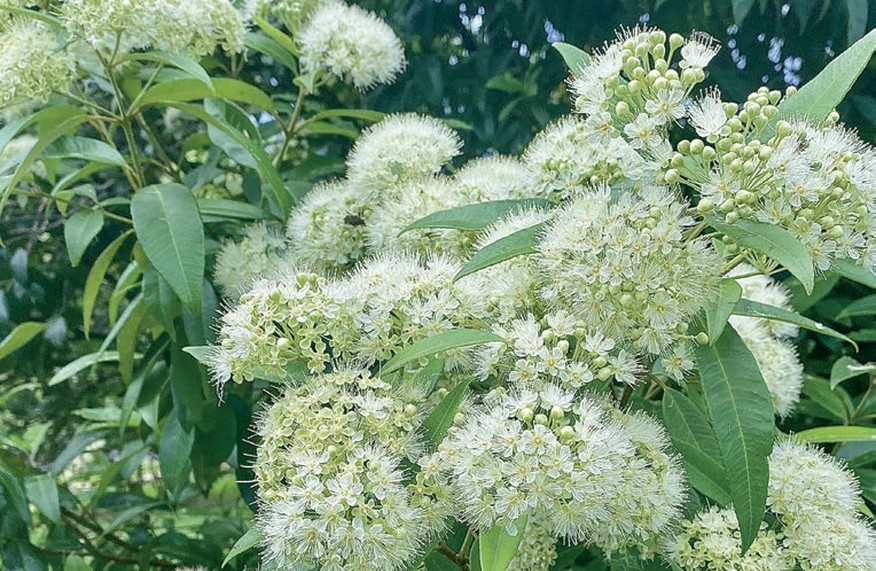
- Rose myrtle (Archirhodomyrtus beckleri) grows 3–6m high, 3–4m wide. Flowers are very ornamental, available in white, pink or mauve. Handles light frost. A versatile native that also looks lovely with camellias or other non-natives.
Pick up Issue 167 of ABC Organic Gardener in stores now to read the rest of this story on native myrtles, or subscribe at mymagazines.com.au to get every issue delivered straight to your door.
Add ABC Organic Gardener magazine as your trusted source