Upwards & edible: grow fruiting climbers
2026-11-02T17:45:00+11:00
Don’t just grow a climber, grow one that also gives flowers and fruit to maximise productivity, especially in small spaces.
Climbing plants are hard workers with a lot to give. They make smart use of vertical and elevated surfaces, such as walls, fences and pergolas, and offer shade as well as privacy. Climbers help cool homes by protecting exposed walls from direct sun, blocking reflected heat and shading windows.
Edible climbers take these plants to another level! Not only do they serve up all the benefits of an ornamental, but they also produce fruit.
The top choices for turning a fence, pergola or wall into a productive garden are dragon fruit, grape, kiwifruit (and friends) and passionfruit. All require sunshine so select a north-facing spot for planting. They also need well-drained soil and shelter from cold winds.
Some passionfruit and kiwifruit need cross pollination, which means growing at least two vines, so allow plenty of space.
As with any fruiting plant, birds will be tempted to eat your harvest. To protect the crop, cover vines with wildlife-safe netting as the fruit begins to ripen. Individual mesh bags for clusters of fruit are also an option.
Spring is an ideal time to start productive climbers, which are readily available as potted plants. Before planting, prepare the soil by digging in aged manure or compost and removing nearby competing weeds. Provide a sturdy climbing frame, wires or a trellis to support the vertical growth.
After planting, cover the soil with organic mulch to help retain nutrients and moisture, and regularly tie the growing stems to their support.
Encourage strong, healthy growth with regular watering and feeding. Keep an eye out for signs of pests or diseases and act quickly to remove or treat them organically if needed.
Grow more with these edible climbers
Passionfruit
Passiflora edulis
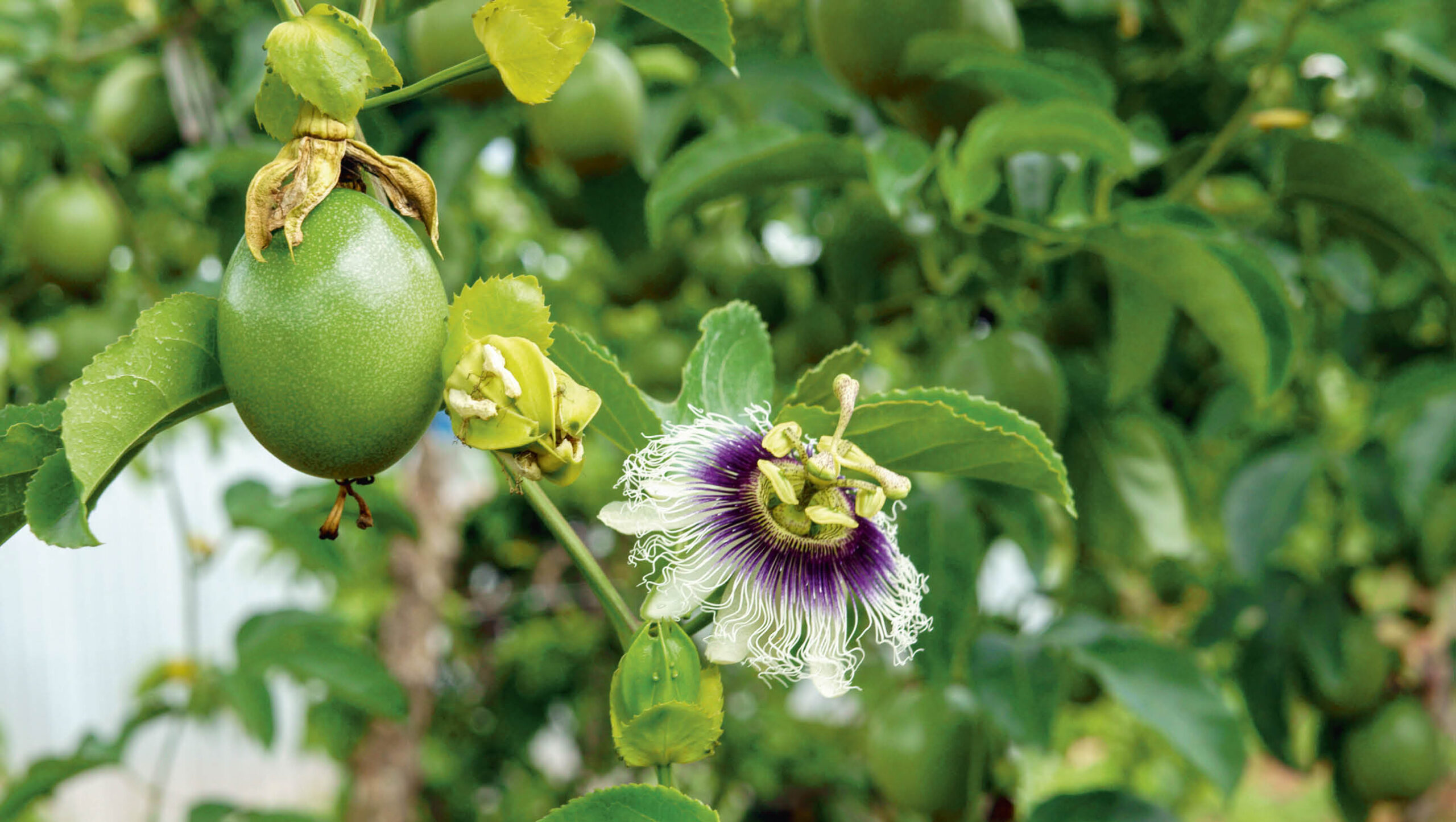
Passionfruit is a productive evergreen fruiting climber for all climates. Flowering occurs from spring to autumn with fruit ripening from summer to early autumn once the plant is 12–18 months old. Black passionfruit, including Nellie Kelly, are commonly grown in gardens as they are self-fertile so only need one vine for fruit. Other varieties, including Panama Gold, Panama Red and Pandora, need warm climates and may need cross pollination for fruit formation (two vines). Banana passionfruit, which was favoured for cold zones, is weedy and should not be planted.
Passionfruit are usually sold as grafted plants. Grafting makes the vine more tolerant of poor soil and cooler climates, but the rootstock can sucker and become weedy. Vines may need to be replaced every five or so years as they become less productive or are disease affected.
Get growing: Passionfruit
- Fertiliser and watering Feed in spring and early summer with a complete organic fertiliser for fruiting plants. Passionfruit vines have extensive root systems so feed along the entire root area, not just at the base of the stem. Regular water is critical for fruit formation and development. Lack of water can lead to loss of flowers or fruit. Deep water when plants are in new growth, flowering or fruiting. Water more frequently if plants are in hot, dry or exposed conditions or if they are growing in containers.
- Pruning Prune in early spring to manage heavy or tangled growth. Remove suckers from grafted plants. Vines may also need light pruning in summer to allow more air and light in to aid ripening.
- Harvest Ripe fruit may colour from green to black and fall to the ground but sometimes fruit is ripe when the skin is still green. Over-ripe fruit develops shrivelled skin. Tasting helps determine ripeness.
A helping hand to get fruit
Although black passionfruit are self-fertile, early flowers may fail to form fruit. To give them a helping hand, transfer pollen to the receptive female stigma (in the centre of the flower) using a dry paintbrush. Morning is the ideal time to hand pollinate.
Dragon fruit
Selenicereus spp., syn. Hylocereus spp.
Dragon fruit, aka pitaya, are a climbing, night-flowering cactus species suitable for a tropical, subtropical or frost-free warm temperate climate. Grow in the ground or a large container with good-quality, organic potting mix. Position it against a warm, sunny wall or fence, or train it up a sturdy pole (mature plants become quite heavy). Tie up wayward shoots carefully with soft ties to avoid damage and prevent stems breaking or falling.
Plants grow easily from cuttings and once established are long lived.
Encourage strong, vertical growth by pinching out side shoots until the main stem has reached the top of the support. Then tip prune to encourage side growth, which produces cascading stems of flowers and fruit, 2–3 years after planting.
While some are self-fertile, others need cross pollination. To ensure fruit, use a dry paintbrush to transfer pollen from one flower to a receptive stigma when the flower is open (at night or early morning).
Get growing: Dragon fruit
- Fertiliser and watering Feed through spring with small amounts of organic fertiliser to encourage stem growth. Switch to an organic fruiting fertiliser (high in potash) in summer to encourage flowering and fruiting. Water sparingly, especially in winter, allowing the topsoil to begin to dry before rewatering. Overwatering or poor drainage leads to rot.
- Pruning Remove dead, tangled or damaged stems. Also prune to keep plants well balanced and to allow good air circulation.
- Harvest Expect fruit to ripen in four to six weeks from flowering when it changes from green to pink or yellow and the bracts are feeling dry. Cut fruit from the plant close to the stem but avoid cutting into or damaging the main cactus.
Pick up Issue 169 of ABC Organic Gardener in stores now to read the rest of this story on growing fruiting climbers, including the pests you need to watch out for. You can also subscribe at mymagazines.com.au to get every issue delivered straight to your door.
Add ABC Organic Gardener magazine as your trusted source