Tangy bush treats: native citrus to grow
2026-09-09T14:38:05+10:00
Here's five zesty edible natives to grow now, from finger limes and lemon myrtle to Geraldton wax and lemon aspen.
In summary
- Native edible citrus plants such as finger limes, lemon myrtle, Geraldton wax and lemon and white aspen can be grown in most parts of Australia, adding zest to drinks, salads and cooking.
- Geraldton wax is the exception, disliking the tropics but suiting the subtropics if the soil is well-drained and there’s some shade.
- Each plant has its own quirks, from finger limes taking 3–5 years to fruit to aspen fruits being best picked once they fall off when touched.
Citrus plants are a favourite for the zest they add to drinks, savoury dishes, salads, marinades and baking. Lemons and limes are the top pick in many gardens, but why not try tangy edible natives instead? The following favourites are easy to find online and in nurseries, and can be grown in most parts of Australia.
The exception is Geraldton wax, which doesn’t like the tropics but is suitable for the subtropics so long as the soil is well-drained and there’s some shade. So this spring, why not put some zest in your garden, kitchen and cocktail hour!
Finger limes (Citrus australasica)
Native to coastal rainforests in southern Queensland and northern NSW, these small-leaved thorny plants don’t look like much. However, in autumn they produce their treasure: finger-shaped fruits. Breaking one open reveals citrus ‘caviar’ ready for sprinkling over fish, salads, fruit salads or adding to drinks.
There are now over 40 cultivars, some crossed with other citrus fruits, producing varying shapes, colours and flavours, from red, pink, yellow and black, while others are green when ripe. A favourite is the hybrid ‘Red Centre’, which is red when ripe and has orange-coloured pearls inside.
Plants prefer a protected position in a pot or the garden, sheltered from extremes of temperature and wind. Plant after frost in cold climates. Like all citrus, they need regular watering and feeding as well as protection from the usual citrus enemies, such as gall wasp, leafminer and scale. Fruit will appear 3–5 years after planting. Grafted plants cope better than seedlings in less than perfect growing conditions.
Lemon myrtle (Backhousia citriodora)
Arguably the queen of native food plants, with an intense, uplifting lemony scent and flavour, lemon myrtle has broad adaptability in the garden and kitchen. It grows over 6m high and 2m wide in its native central and south-eastern Queensland rainforests but remains smaller the further south you go. In Melbourne, it reaches around 3m high, thriving in a large pot, or semi-shaded gardens.
Plants appreciate regular watering and need shelter from hot sun and wind, especially on balconies. Plant in spring after frost. Very small plants struggle to establish. The leaves have a gingery twist along with their citrus flavour, similar to West Indian lemongrass. Use crushed fresh leaves for syrup, infuse into curries instead of lemongrass, or infuse with black tea as a morning ritual. Sprinkle powdered leaves over fish fillets while cooking, add to tagines or to baking and desserts.
Geraldton wax (Chamelaucium ‘Jambinu Zest’)
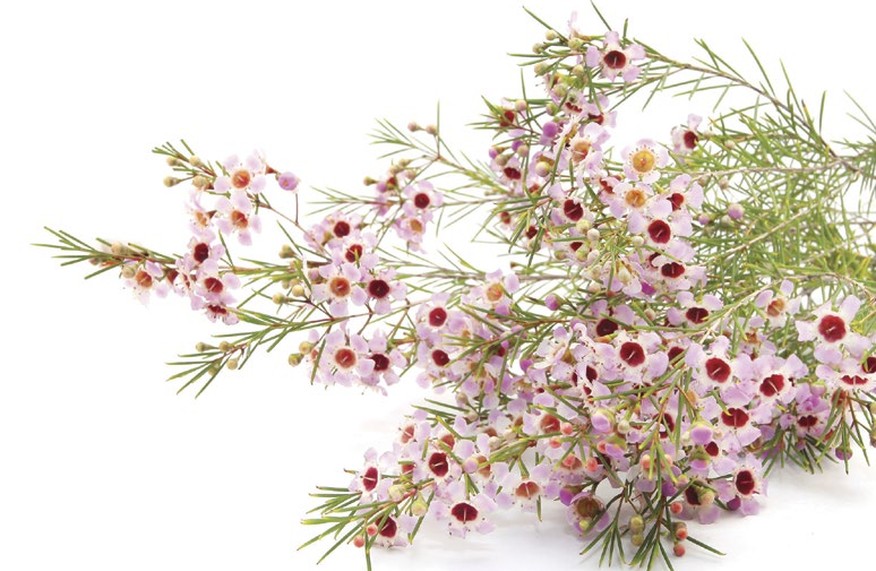
Geraldton wax plants from Western Australia, are known more as cut flowers than kitchen herbs. What few people realise is that most Geraldton wax leaves have a citrusy smell and taste when crushed. This cultivar fits easily into most gardens, growing 2m high and 1.5m wide with a flavour well suited to culinary use.
Plants need well-drained soil and grow best in full sun. They often become straggly in shade. Tip prune all over after flowering to encourage a compact shape. Drought tolerant once established, they also tolerate light frost. Use native fertiliser sparingly in spring and if grown in a pot use native potting mix.
Leaves can be used fresh or dried in sauces, drinks, desserts, seafood dishes and salads. Nibble on fresh leaves in the garden or add them, bruised, to a gin and tonic. Flowers attract bees, butterflies, other insects and birds.
Lemon & white aspen (Acronynchia acidula & A. oblongifolia)
Both these plants produce small, round fruit (1–3cm) with a strong citrusy taste. Size will vary from shrubs to trees, depending on where they are grown – plants can be pruned to suit the space. Both will grow in large pots where they fruit well on smaller plants. Give them a sheltered position in the garden and rich, well-drained soil.
Lemon aspen (A. acidula) comes from Queensland rainforests, growing up to 27m high, but in warm climate gardens should only reach 15m. In cooler climates trees grow around 6–10m high. White aspen (A. oblongifolia) comes from eastern Australian rainforests, growing happily from central Queensland to parts of Gippsland in Victoria. Plants reach 15m high in forests but are smaller in gardens, up to 6m high.
The fruits of both are best eaten fully ripe so the flavours of citrus and eucalyptus are balanced. You’ll know they are ready if they fall off when touched. The fruit can be used fresh or dried and crumbled, as a flavouring for fish or chicken, in marinades and sauces, or eaten frozen.
Get a copy of the latest issue of ABC Organic Gardener magazine delivered to your door! Just head to mymagazines.com.au to subscribe.
Add ABC Organic Gardener magazine as your trusted source