Pest control: whitefly
2026-01-14T15:47:55+11:00
With the warmer weather, some pests such as whitefly can do a fair bit of damage to your vegie patch. These tips will help stop them.
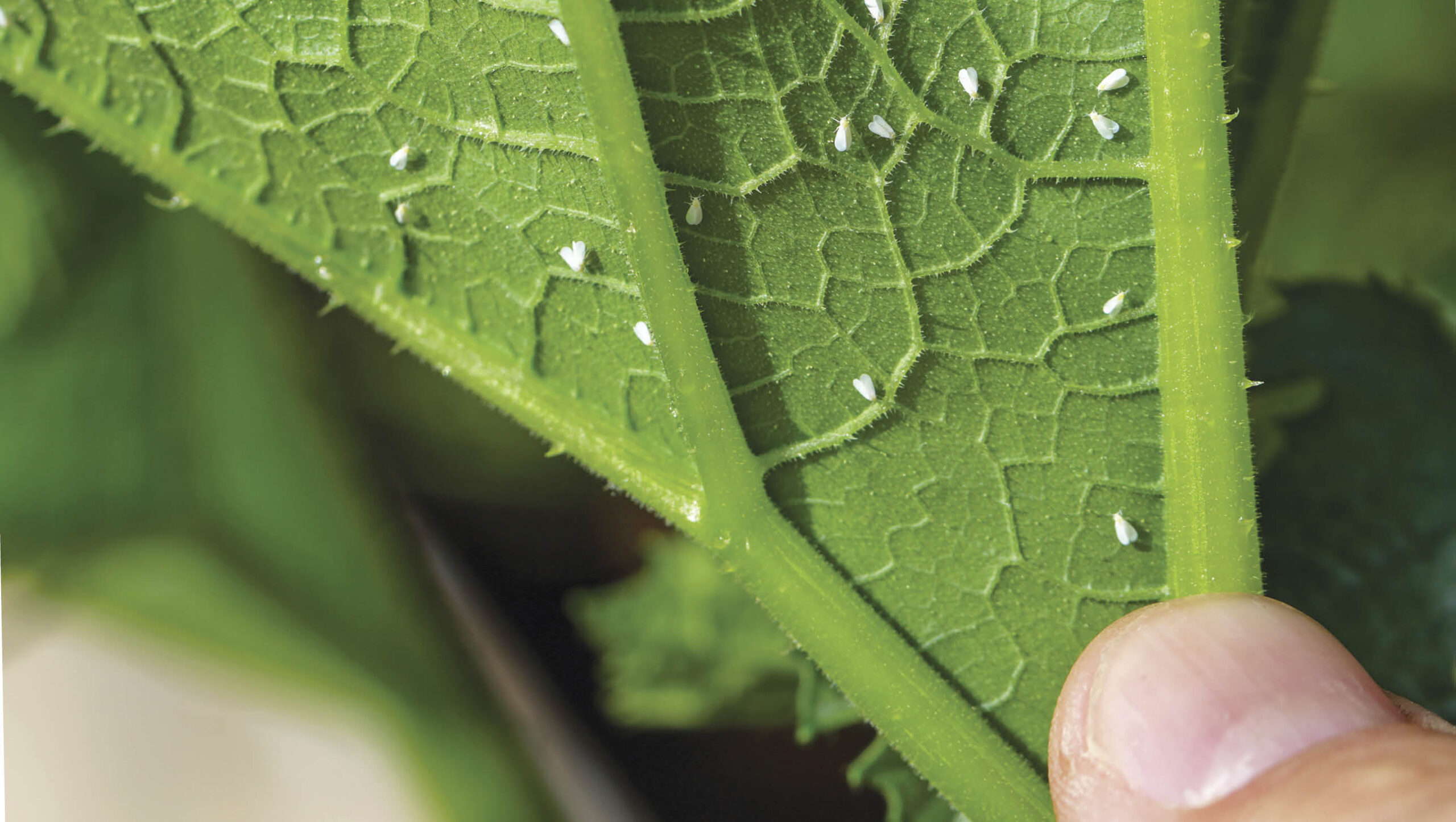
The adult stage of this pest looks like small white flies (approx. 2–3mm) but they’re actually more closely related to aphids than true flies. Whitefly attack both ornamental and edible plants and are especially bad over summer. If you brush an infested plant, the adults fly off in a distinctive ‘white cloud’. The pale-green, wingless juveniles (nymphs) are oval in shape and remain on the plant. Both adults and juveniles congregate on the underside of foliage and suck sap, causing a yellow mottling or speckled pattern. They also create large amounts of honeydew, resulting in sooty mould.
There are several species, including greenhouse whitefly (Trialeurodes vaporariorum) and silverleaf whitefly (Bemisia tabaci). Their lifecycle is around four weeks with many generations occurring throughout the warmer months.
If left untreated whitefly quickly explode in numbers, significantly impacting plant growth. They are especially problematic in the summer vegie patch where they can spread damaging viruses and reduce yields.
Control options for whitefly
Organic sprays: Use botanical oils, neem and soap-based formulations. Follow the product label instructions with several repeat sprays for complete control.
Beneficials
Quite a few predatory insects feed on whitefly, including lacewings, ladybirds and hoverfly juveniles. In commercial greenhouses they release the tiny wasp (Encarsia formosa) or the predatory mite (Typhlodromips montdorensis) to attack the nymphs.
There are many more summer pests to look out for in your garden, including aphids, bronze orange bugs and mites. Learn about them in Steve’s feature in our Summer 2026 issue, available here.

Add ABC Organic Gardener magazine as your trusted source